



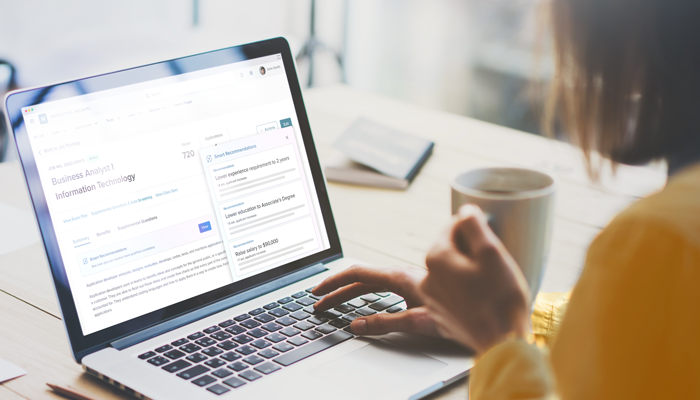
How is AI used in Government HR?
Draft • Recruit • Screen • Evaluate • Develop

Public sector HR teams are being asked to recruit, onboard, support, and develop their workforce with limited staff, flat budgets, and growing accountability. When drafting, screening, summarizing, and assigning still happen manually, routine work consumes the time teams need for people, service, and leadership.
NEOGOV embeds assistive AI directly into the HCM workflows teams already use. It helps create and refine content, surface qualified talent, summarize complex information, and recommend relevant development - without replacing human judgment.
This is practical AI that reduces friction across the employee lifecycle, gives people a stronger starting point, and keeps every final action and decision in human hands.
Proven in Agencies Like Yours

How the State of Iowa proactively promoted job openings and boosted applications by 17%


How the City of Portland cut time recruiters spent placing recruitments from days to minutes


How the Linn County Dept of Health Services raised applications for hard-to-fill roles by 30%


How the West Virginia Division of Personnel accelerated hiring and filled 33 roles in 60 days

AI Across the Public Sector Employee Lifecycle
NEOGOV AI is built into the products and workflows public sector teams already use - helping people move from first draft to final action with less manual effort, clearer context, and agency-level control.

WRITE & COMMUNICATE
Turn Rough Drafts Into Clear, Professional Content
AI Writing Assistance across Insight, eForms, Learn, Perform, and Onboard
Draft, rephrase, shorten, expand, and check spelling and grammar in the places teams already create job postings, email notifications, onboarding tasks, course content, performance goals, and more. The assistant preserves links, images, and formatting so users can polish content without rebuilding it or moving sensitive work into a separate tool.
ATTRACT & ENGAGE
Reach More Qualified Candidates With Less Guesswork
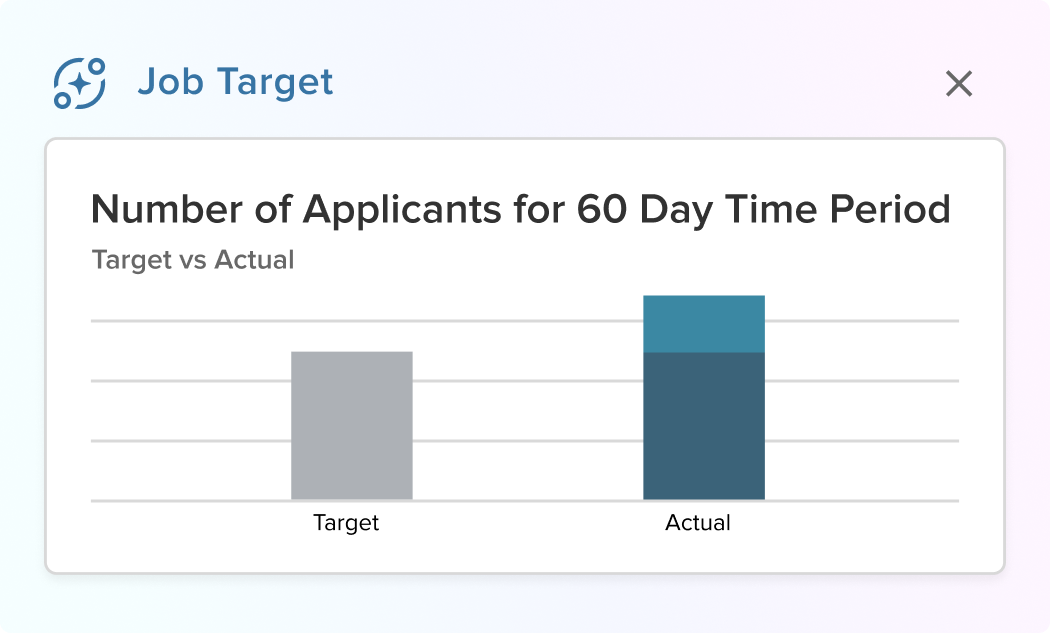
JobTarget Programmatic Campaigns in Insight
JobTarget campaigns automatically distribute job ads across targeted boards and optimize spend based on performance. Government HR teams can reduce the time spent managing individual placements, focus limited recruiting budgets where they are most effective, and reach more qualified candidates for hard-to-fill roles without adding more manual work.
SOURCE & SCREEN
Find and Review Qualified Talent Faster
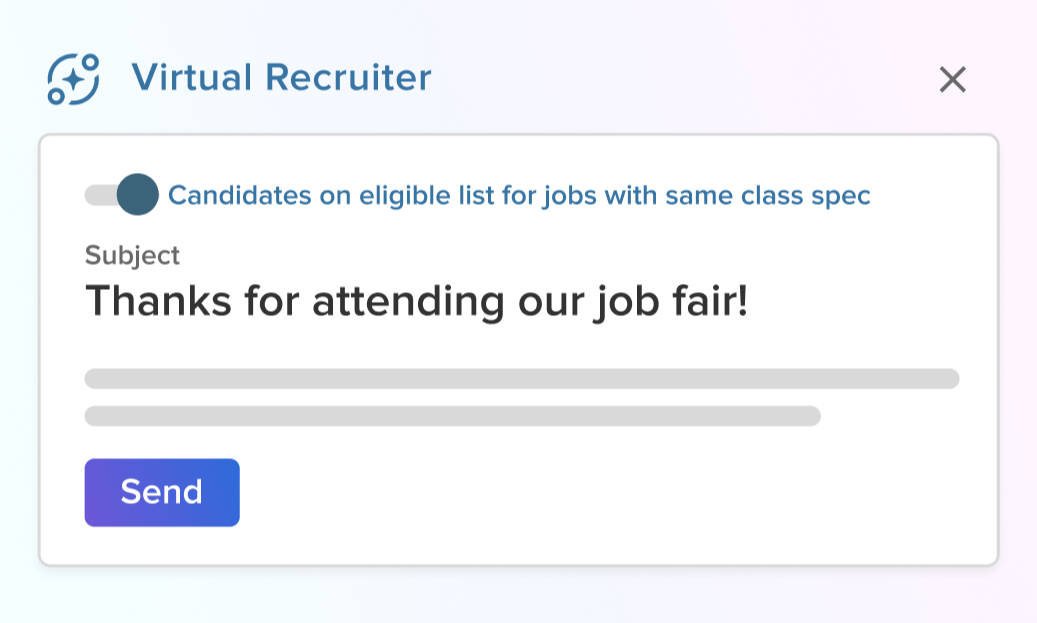
Virtual Recruiter + AI Candidate Summary (Early Access) in Attract
Virtual Recruiter identifies qualified candidates and helps teams send personalized outreach with a single click. AI Candidate Summary creates a concise snapshot of a candidate’s relevant skills and experience directly in search results, helping recruiters scan profiles before opening individual resumes.

EVALUATE & COACH
Turn a Full Performance Cycle Into a Better Starting Point
AI Performance Evaluation Summaries in Perform
Bring relevant journal entries, check-ins, reviewer inputs, achievements, competencies, and other performance context together in a narrative starting point for an evaluation. Managers can spend less time reconstructing the year and more time reviewing the evidence, adding context, and coaching employees.

DEVELOP PROACTIVELY
Guide Employees Toward Relevant Development
AI-Powered Course Recommendations in Learn
Suggest relevant courses based on an employee’s professional history and patterns from departmental learning activity. Employees can discover development that fits their role more easily, while administrators spend less time manually mapping every course path.
Built for Responsible AI Across Government HR
NEOGOV AI is designed to create capacity without separating work from the controls, context, and human judgment public sector teams require.

Human-Guided by Design
AI helps teams draft, summarize, recommend, and prioritize. HR professionals, recruiters, managers, and employees review the output, apply context, and remain responsible for every final action and decision.

Protected Data and Agency Controls
AI workloads operate within protected cloud frameworks. Customer data is not used to train public or global AI models and remains within the agency’s tenant. Administrators can enable or disable features, manage access, and exclude sensitive content where supported.

Built Into Public Sector Workflows
NEOGOV AI works inside the HCM products government teams already use, with public sector regulations, workflows, and accountability in mind - not as a generic, stand-alone tool.